This page features various insights into Jo Jena's instruments and recording techniques.
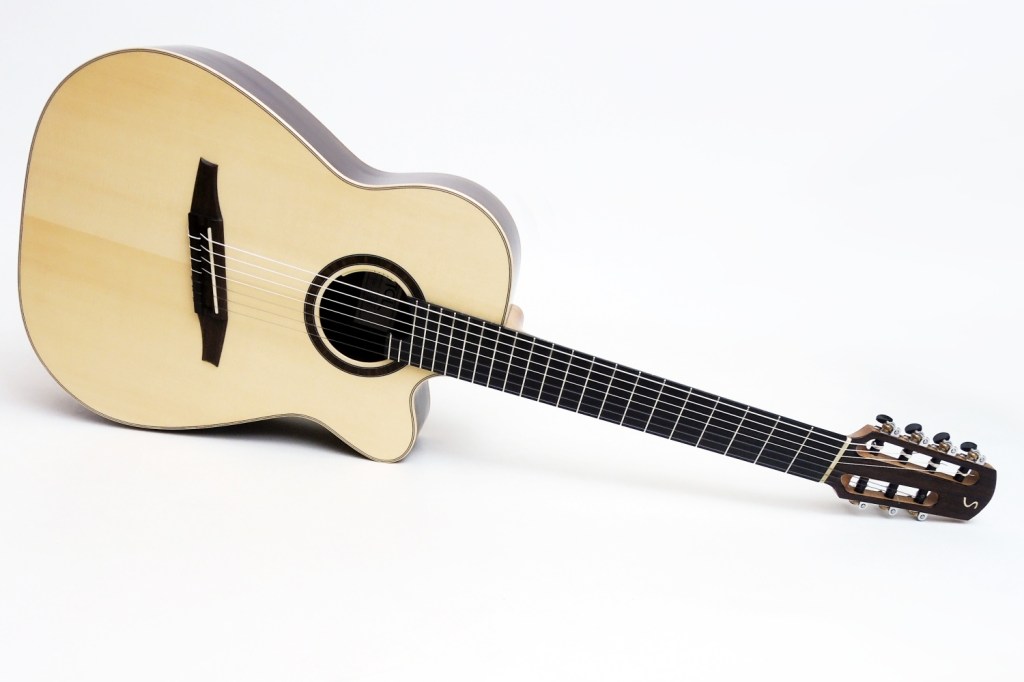
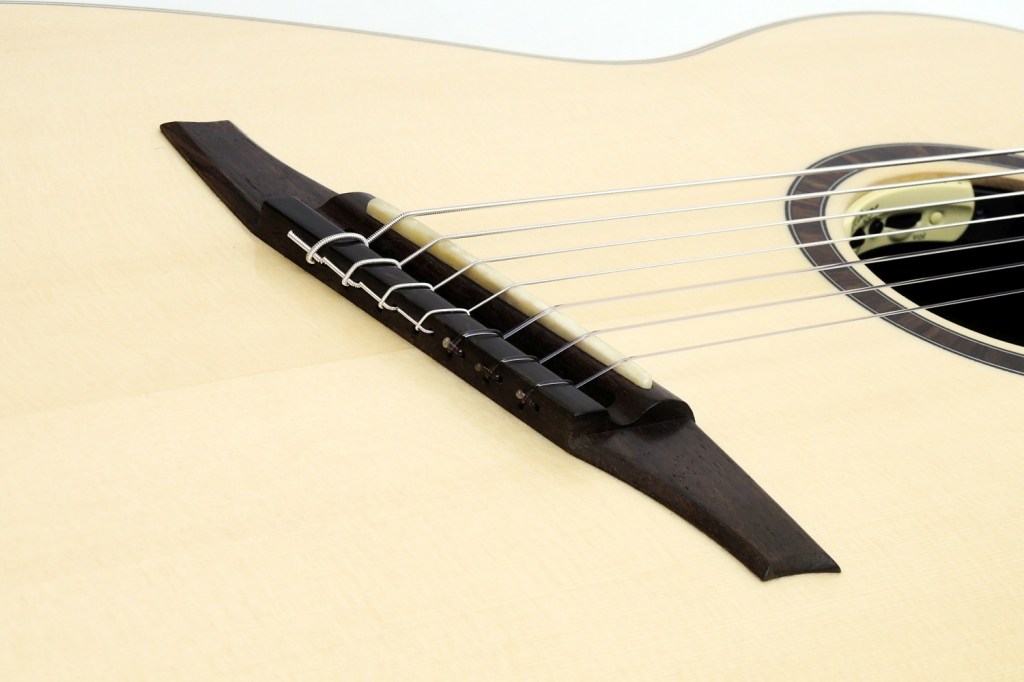
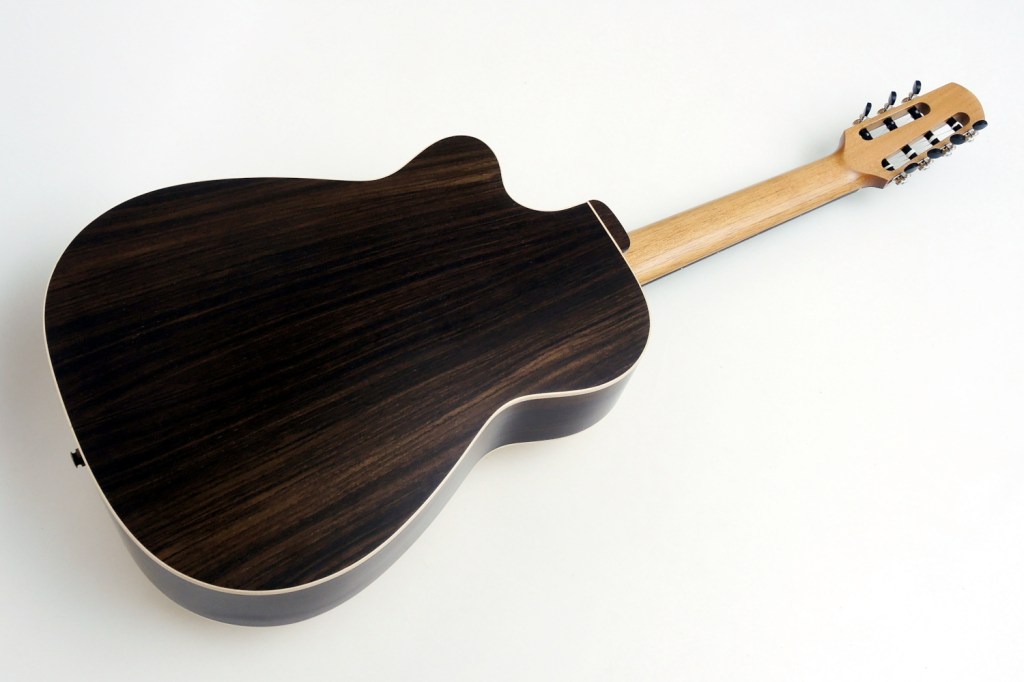
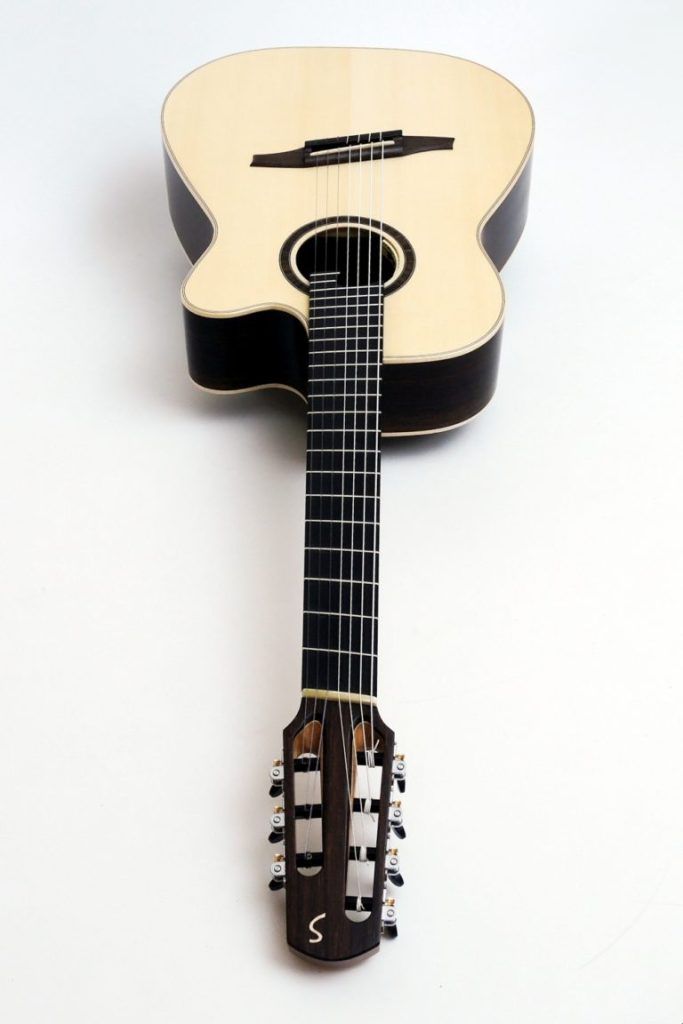
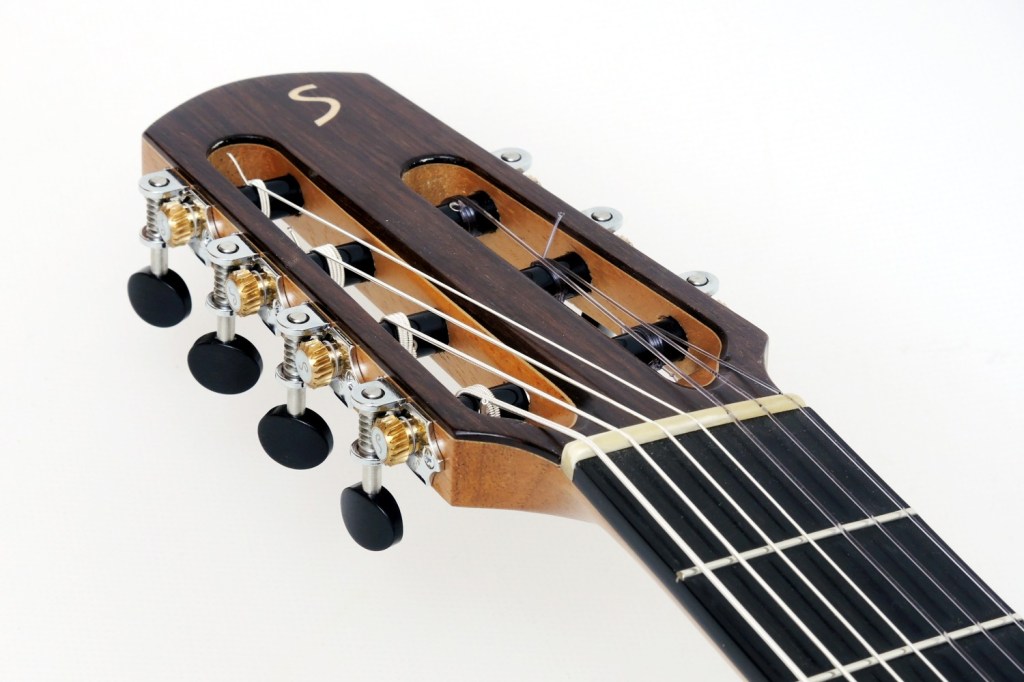
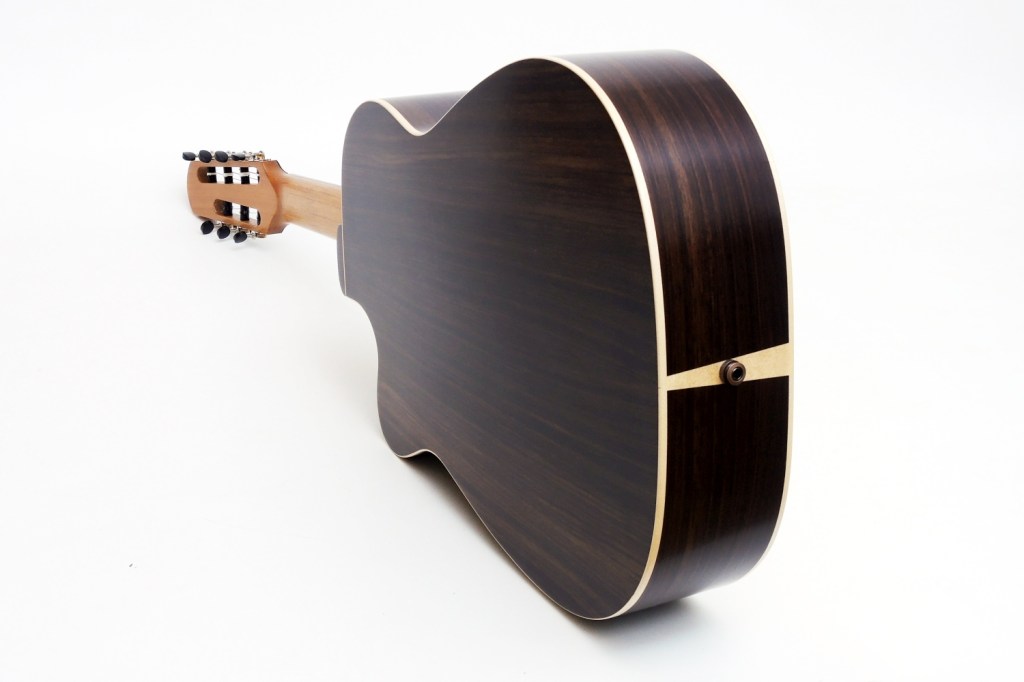
Stoll Guitars Classic Crossover 7-String Multiscale Guitar with Pickup and Cutaway (Custom Built)
copyright stoll guitars
From the former Stoll Guitars Webpage:

"Classical crossover guitars are unusual enough per se, but with this custom-made guitar we have once again shown what modern guitar building really looks like at its highest level.

The preferred musical style of our customer is jazz in the most general sense. Requirements for the guitar were solo, but also rhythmic playing and a playability that goes towards electric guitars. Also important was playing in high registers and the corresponding excellent sound quality in this frequency spectrum, which also had to be presentable with a microphone during studio recordings. The preferred sound was nylon with an extended bass range.

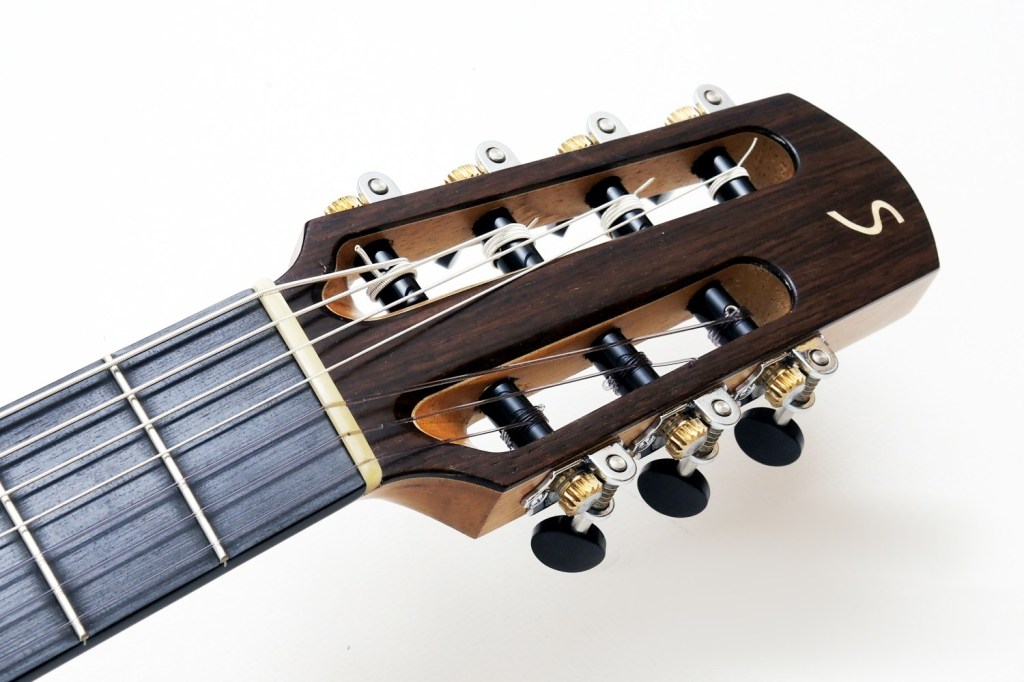
7-String Multiscale

For these requests we have extended our Crossover guitar by one string and equipped it with fanned frets to make the seventh string also sound good. The fanned frets enhance playability at the same time, as the fretting hand makes a natural movement on the fretboard, similar to a windshield wiper.

The sound quality in the higher registers is also supported by the fanned frets, which provide each string with the optimal length to fully unfold its sound potential. Of course, the cutaway makes playing in this range easier.

Hybrid as Can Be

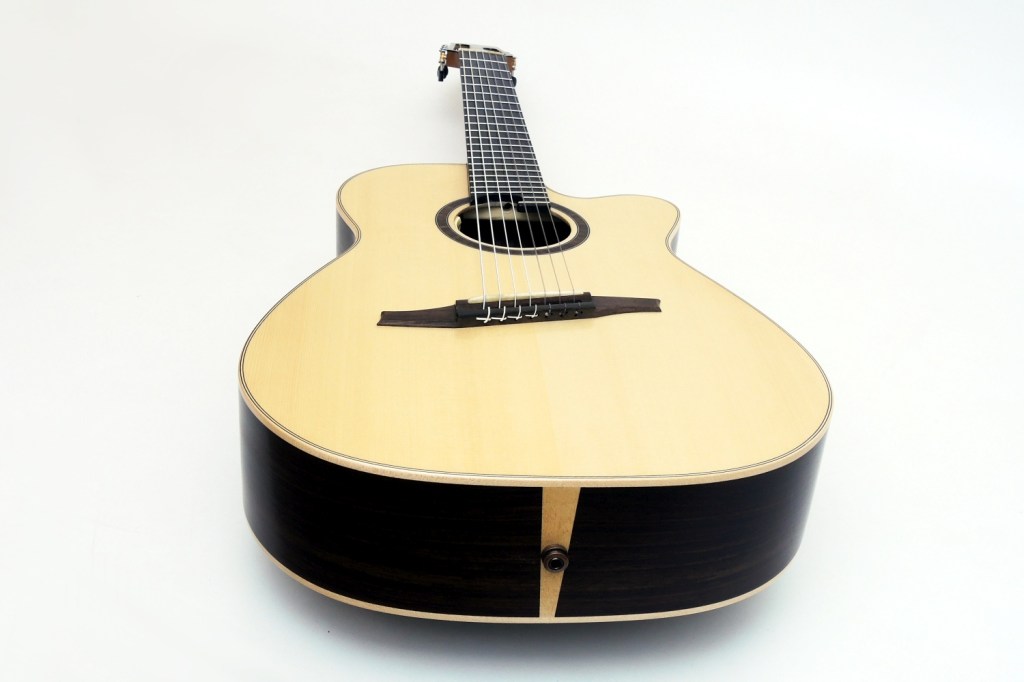
The body of this 7-string has the size of a steel string guitar and also the neck transition at 14th fret, in contrast to the transition on classical guitars at 12th fret.  Also from the steel string guitar comes the fingerboard with the 16" arching and the typical width. 48 mm can be considered standard for six strings, and 55 mm when the seventh string is added.

The top bracing has been adapted to the reduced tension of the nylon strings as well as to the specific requirements of 7-string and multiscale guitars. This allows the Crossover to impress with excellent volume and fast response.

The string action is kept as low as feasible in order to emulate the electric guitar playing feel as much as possible.

Gambale Tuning

Our customer, unlike most others, plays the low string tuned to A, which sounds very good due to the extended scale length of 67 cm. A second nut was made for an alternative Gambale tuning, that is, the seventh string is the low A, then the four middle strings of the normal 6-string guitar, A, D, G and B, the latter being tuned to C.  E and A follow, but not, as one might think, higher than C, but these two strings are tuned one octave lower. This is probably the first nylon string guitar with a Gambale string set.

Woods and Features

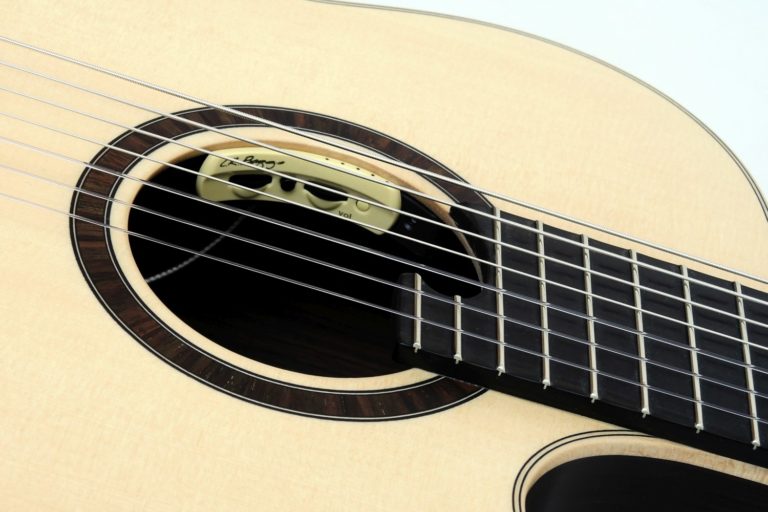
Indian Rosewood with great selectivity in the trebles as well as a top made of Alpine Spruce fit well to the sound concept of this Crossover. At the customer's request, the top is of selected mastergrade quality to optimally support the artist's soloistic ambitions. Galli-strings for the first six and Fisoma for the seventh string support the sound concept, the  L. R. Baggs Anthem pickup is intended for live performances, while microphonic pickup is planned for the studio.

Sound

The showcased Crossover shines with outstanding volume and excellent selectivity, making mixing at a life performance or at the studio a cakewalk. It is deliberately equipped with a medium-fast response to achieve a warm and supportive sound. The rich extended low-range doesn't come at the expense of the treble, but gives the singing, radiant treble a solid foundation."

used with permission by Stoll Guitars (disclaimer: JJ is not an endorser)
My recording setup is the result of decisions that I have had to make over the last few years. As a result, this is an essay about user experience and the social psychology of my recordings.
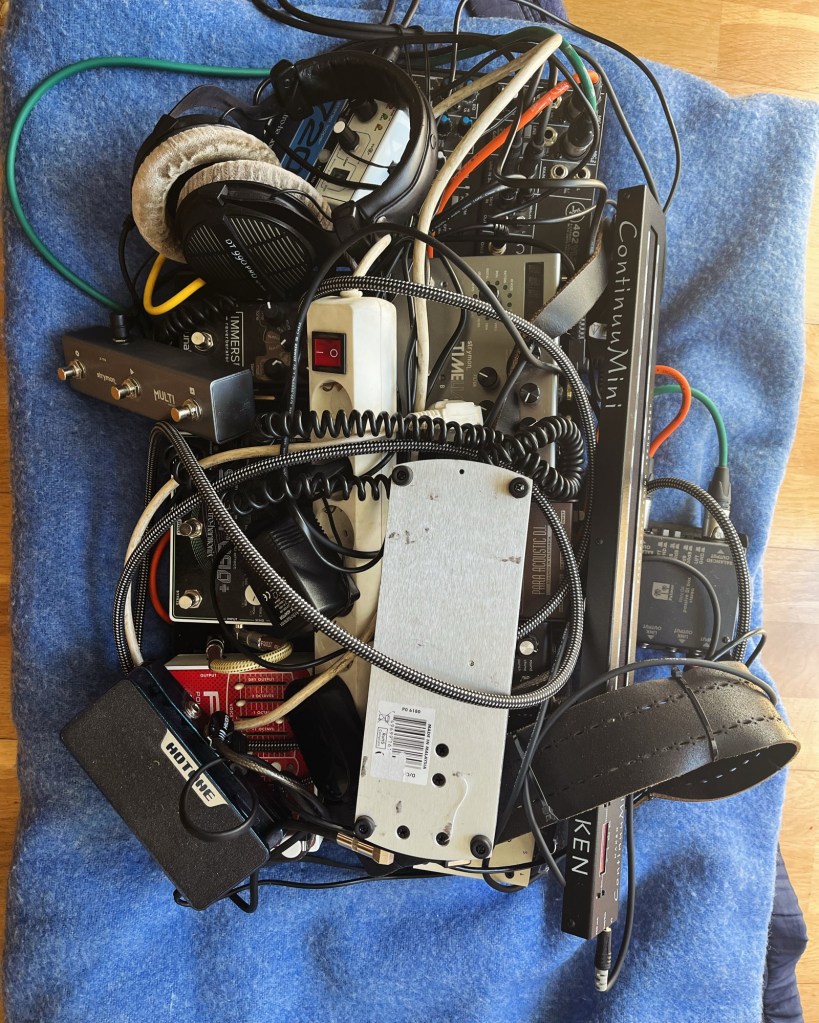
Let us start with the signal chain: Stereo condenser microphones, direct signal from the nylon guitar pickup, pedalboard and haken synthesizer go into a class A, Swiss made mixing desk and then direct to tape. From 2020 to 2025 I solely relied on a Mix Pre 3 device, whereas now I usually record the mixing sum directly to a Tascam mastering recorder. A closed studio headphone is used for monitoring.
The pedalboard features 1.) electric chain: amp modeler → switcher → volume pedal → guitar synthesizer 1 → guitar synthesizer 2 + pedal (with extra out to mixer) → delay unit → reverb and 2.) DI for nylon string guitar → switcher → rest of chain like above (usually only used live). The booth is shielded in all directions, so that room information is only applied digitally using a very good reverb.This technique was especially used by Jan Erik Kongshaug in the mid to late 70s when recording Gismonti's oder Towner's solo guitar.
without title, 2024
Now let us dive into the strategies and principles behind the setting:

1.) I like to work fast. This applies to composing and recordings, as well as mixing process, mastering, marketing, cover design, edition of the sheet music, and management.

2) I don't work at a screen when I'm recording. I would feel like an office worker. Screens have a tendency to become the focus of your work. But the centre is my instrument and the music. I also record everything with a digital tape machine. It is so small and of such high quality that I can concentrate fully on my performance. When things are going well, I automatically close my eyes. Edits and overdubs are so time-consuming with this tape machine that it teaches me to play everything in the first or second take if possible: Both free solo and when recording multi-track orchestras. This old mojo of the 50s to 60s jazz and classical recording years process is worth preserving.

3.) Using high quality condenser microphones is mandatory. My mixing desk was handmade in Switzerland and is optimised to deliver the analogue quality of classic, large high-end consoles and class A preamps even in a small package (nothing you get at large music-online distributors comes close). The device is particularly optimised for acoustic instruments and their typical fast transients. Accordingly, I avoid the use of EQs and compressors and place a lot of emphasis on high-quality reverb and sufficient headroom (according to the Bob Katz K-System).

4.) My effects pedals hardly have any submenus. For the creative process, it is important for me to have direct access to all parameters. Especially during free improvisations, everything happens very quickly and intuitively. Similar to devices in tough environments, everything must be accessible at lightning speed: large controllers, robust buttons, one function per device. This is due to the fact that these processes happen at a biological speed much faster then conscious reasoning.

5.) I mix my music in a separate place. Here, too, haptics and analogue summing are important to me. Instead of working with just a mouse, I use my mixing desk and a professional controller for navigation. But I can't do without a DAW and a professional mastering programme. Here I need a large screen and the ability to see and edit all the details with surgical precision. But what's really important is the separate place. It is important to really shed the role of the musician and take on that of the recording engineer. I learned what I needed for this while recording my album ‘Hydrangea’ at Loft in Cologne: the critical voice that also offers "psychological" support in the right place. It's tricky having to manage yourself here. No matter how hard I try to keep my distance from the perspectives, there are limits. As a result it becomes clear that solo projects are ultimately abstractions of an originally social practice and any consulting during the process can be truely helpful. Here, the duo projects have a great advantage. Ultimately, it is impossible in every human practice to seperate the social from the individual.

6.) I'm sitting on a piano stool when I record. I've never paid much attention to sitting prior to the acquisition. But it is a game changer. When I see the piano stool, it already inspires me musically. I play better. I am convinced that other eras, such as the baroque or the bourgeois era, were better at paying attention to such seemingly peripheral aspects than the digital era. They also have something to do with design and quality of life.

7.) The complexity and subtlety of the sonic expression emanating from my Master-grade nylon guitar or the Haken ContinuuMini cannot be captured well in grids. In most cases, unconscious processes are conveyed through musical expression and these instruments are able to carry them. It is therefore important not to make any compromises in the signal chain and to produce the music in hi-res as well.

8.) It is becoming increasingly important for me to use instruments from experts and enthusiasts who strive for constant incremental improvement in small, highly specialised companies under fair conditions and with a lot of passion. I think this is important for political reasons, but above all, I am now convinced that the quality of the tools is crucial for the final product. For this reason, I am very happy to own instruments, products and services from mostly small, higly specialized companies, who design and built everything in-house. I am aware of how difficult it has become for them to survive in the age of oligopolic slop.

January 26th, 2025, JJ
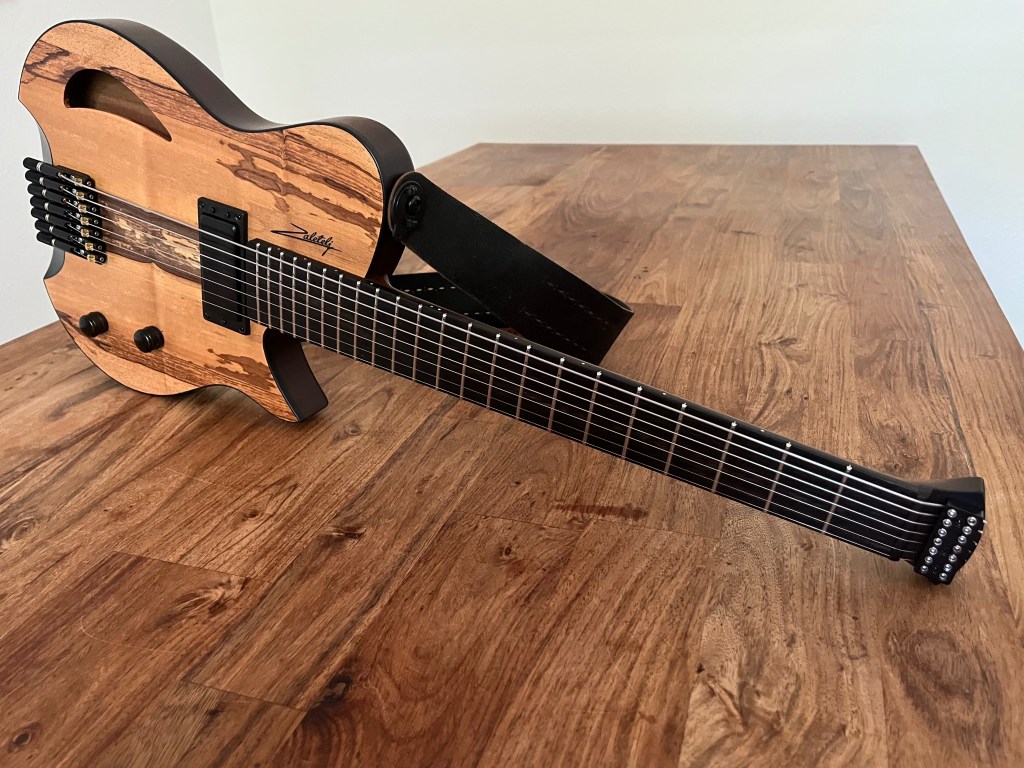
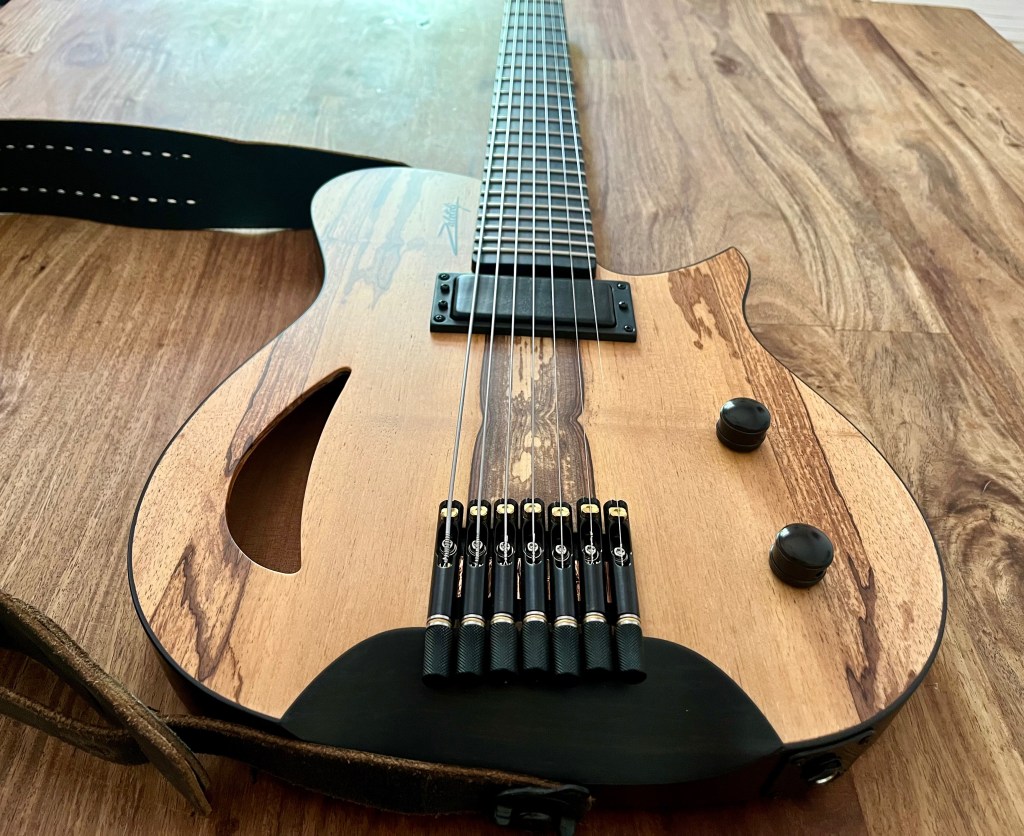
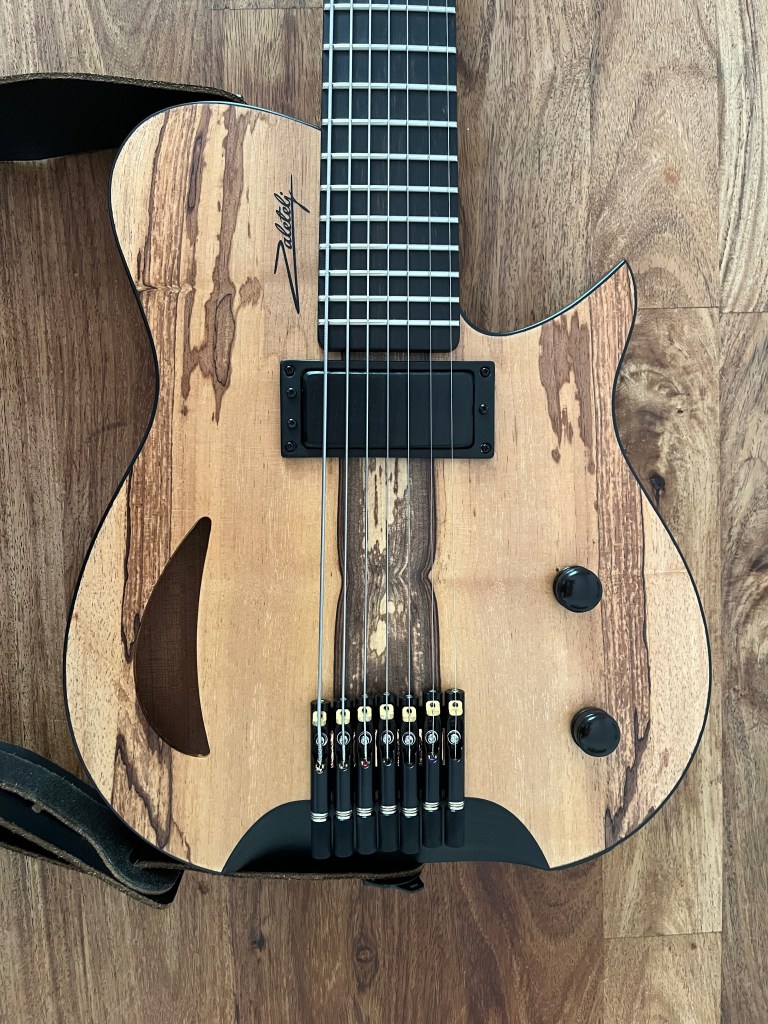
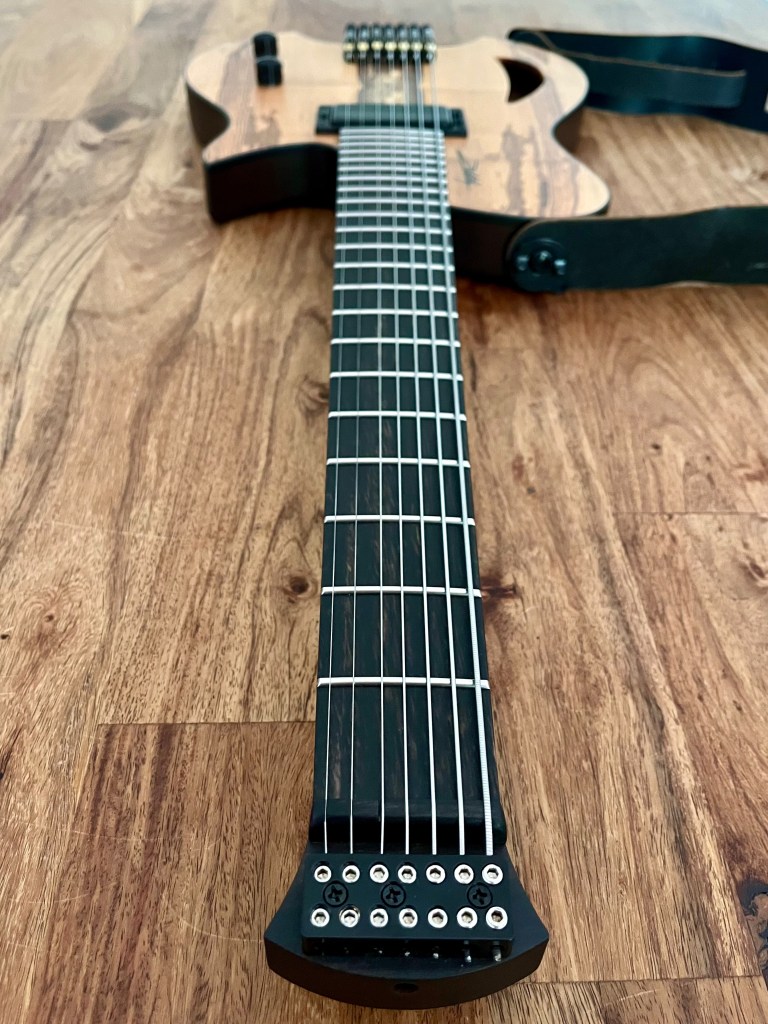
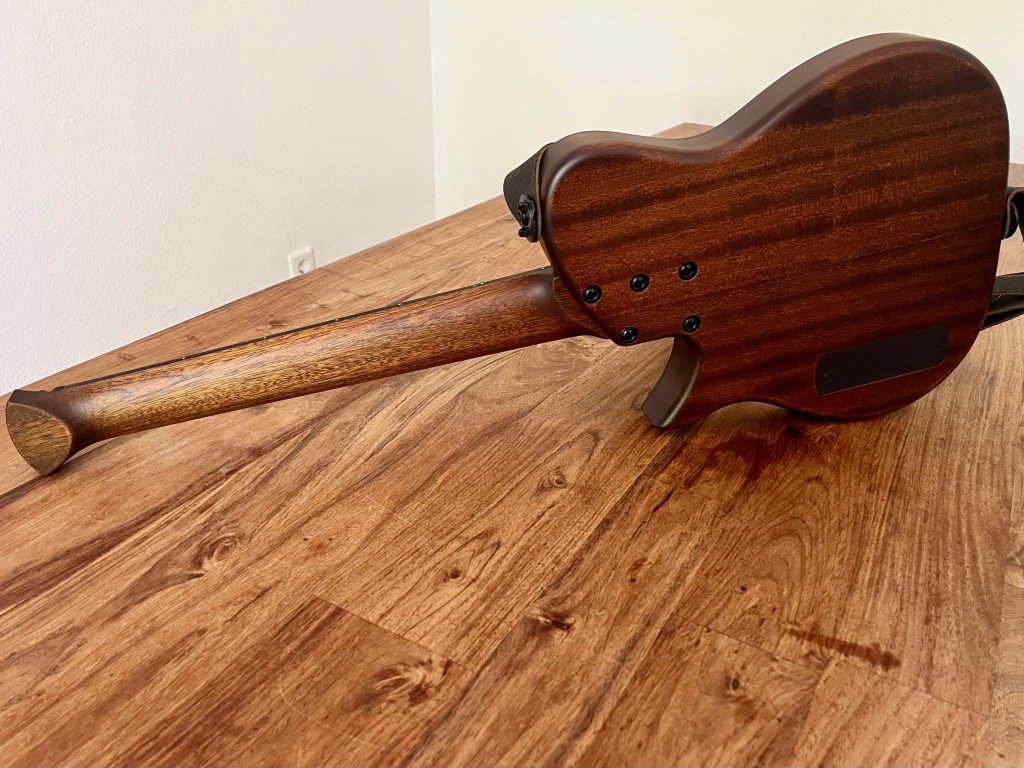
Zaletelj “Amelia” Headless Jazzguitar
The Amelia guitar is a headless model by the Slovenian guitar maker Luka Zaletelj. Zaletelj Guitars was originally founded by his father, but Luka established his own line of guitars in 2007. Still, Master Luka has access to regional Slovenian wood that has been seasoned for at least 30 years. He has managed to lead the company to international renown amongst a select group of world leading jazz guitarists. He is supported in this by his wife Maja, who handles the marketing.

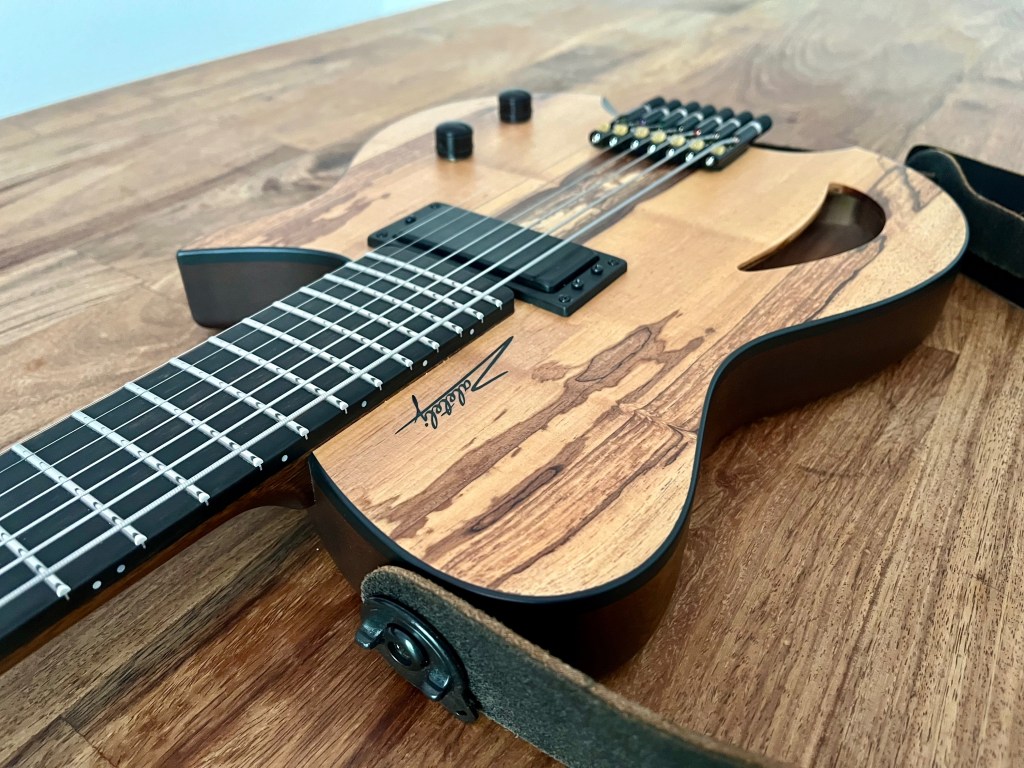
I am not sure, but I guess the name "Amelia" for Zaletelj´s standard model refers to flight pioneer Amelia Earhart (and Joni Mitchell´s great song as well), as it is a compact, lightweight travel guitar that easily fits into plane cabins. My custom model differs from the manufacturer’s standard model in that it has 7 strings and features just a single neck humbucker. The neck profile is based on the thick C shape of Holdsworth´guitars. It is strung with 011–065 flatwounds. This makes the guitar something of a jazz version of the original custom Holdsworth headless guitar by a californian luthier: just one pickup, but in the front position, a floating top in a headless design, a 25,5´´ scale length and a natural finish. For more specs (pickups, wood) please follow the link below.